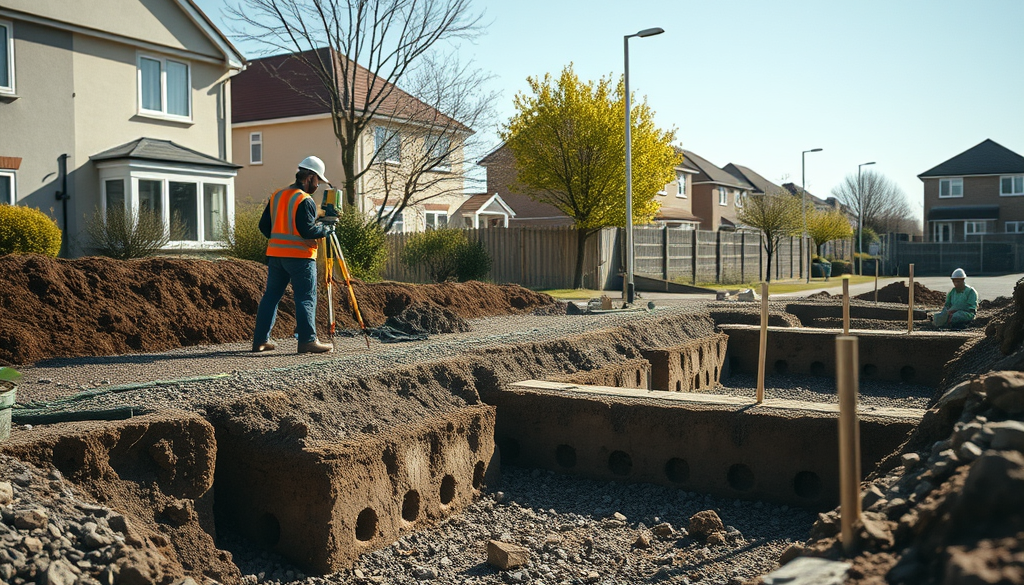
Groundworks for Homeowners: What to Know Before You Build in Plymouth
If you’re planning a new home, extension, or major renovation, you might be thinking about layout, materials, or interior design; but before any of that comes into play, there’s one crucial phase that lays the foundation for everything: groundworks.
Groundworks aren’t the flashiest part of a project, but they are the most critical. Get them right, and your build is solid, safe, and on track. Get them wrong, and you’re looking at delays, budget overruns, or structural issues down the line.
For homeowners in Plymouth considering a construction project, understanding what groundworks involve—and why quality matters more than ever in 2025—is essential. Here’s what you need to know.
What Are Groundworks?
Groundworks are the first stage of construction—literally everything that happens below the surface. They prepare your site for building and ensure your structure has the support it needs to stand the test of time.
Typical groundwork tasks include:
- Site clearance (removing trees, topsoil, debris)
- Excavation and earthworks
- Trenching for drainage and utilities
- Laying foundations
- Installing retaining walls or structural reinforcements
- Surface water management and soakaways
Think of groundworks as the structural backbone of your build. Without a solid, well-prepared base, even the best-designed buildings can run into problems.
Why Homeowners Should Care About Groundworks
You might assume groundworks are the builder’s problem, not yours. But understanding what’s involved helps you:
- Choose the right contractor
- Plan your budget more accurately
- Avoid costly surprises
- Make informed decisions if problems come up
If you’re investing in your home, you want that investment protected from the ground up literally.
The Real-World Impact of Poor Groundworks
It’s not just about shaky foundations. Poor or rushed groundworks can lead to:
- Drainage problems and flooding
- Cracked walls or sinking floors
- Utility issues (blocked pipes, unsafe wiring routes)
- Delays and rising costs later in the build
In the last few years, Plymouth Builders has seen several projects where clients came to us after cheaper groundwork teams cut corners. Fixing those problems always ends up costing more than doing it right the first time.
Ground Conditions in Plymouth: What Makes It Unique?
Plymouth’s landscape can be tricky. From coastal slopes to clay-heavy soil and older urban sites, local conditions vary greatly, and they affect everything from drainage strategy to foundation depth.
That’s why it’s vital to work with a builder who knows the area. At Plymouth Builders, we’ve delivered groundworks across a wide range of sites and know how to plan accordingly whether you’re in a suburban cul-de-sac or building on a hillside with a view.
Good Read: The Importance of Groundworks on a Building Project
What’s Changed Since 2019?
Groundworks aren’t the same in 2025 as they were five years ago. Here’s what’s evolved—and why it matters:
1. Tighter Building Regulations
Building standards continue to raise the bar, especially around drainage, insulation, and flood resilience. Groundworks now require:
- Sustainable drainage systems (SuDS)
- Higher insulation levels under slabs
- More precise setting-out and levelling
A professional builder will factor these into your project from day one.
2. Better Technology
Today’s groundwork crews use laser levels, ground-penetrating radar, and 3D site modelling to plan more accurately and avoid surprises. These tools allow us to reduce errors, prevent over-digging, and streamline the process.
3. Focus on Eco-Friendly Builds
Homes now aim to be greener—and that starts with the groundworks. Permeable surfaces, smart drainage, and responsible waste handling are more important than ever, especially in residential areas.
Questions Every Homeowner Should Ask
Not sure what to ask your builder about groundworks? Start with these:
- How will you assess the site before starting?
A soil survey or site assessment should always come first. - What kind of foundations does my build need—and why?
There’s no one-size-fits-all answer. Good builders explain your options. - How will drainage be handled?
Flood risk and surface water control should be addressed early. - What’s the access plan?
Make sure they’ve considered equipment access, waste removal, and site safety. - Who handles the inspections?
Groundworks must pass specific building control checks—your builder should manage this.
The Value of a Trusted Groundworks Team
When groundworks are done properly, they disappear into the background. The build goes up smoothly, the floors stay level, and the drainage works seamlessly. But the difference between good and bad groundworks? It’s huge.
At Plymouth Builders, we don’t just tick boxes—we future-proof. Our groundwork teams:
- Work to modern regulations and local authority expectations
- Use proper excavation, compaction, and drainage methods
- Keep your site safe and clean
- Communicate clearly at every step
We’ve worked on everything from full new builds to kitchen extensions, and we know how to scale the right approach for your home, site, and budget.
When to Get Groundworks Advice
Don’t wait until construction starts. The earlier you involve a reputable builder, the more you can save on time, hassle, and cost.
Spring and early summer are ideal for groundwork-heavy projects. The drier weather speeds up excavation and reduces site disruption. Planning your build now means you’ll be ready to break ground before autumn.
Good Read: The Critical Role of Groundworks in Construction
Start from the Ground Up
Your home is only as strong as what it sits on. Whether you’re building from scratch, extending, or remodelling, groundworks are the part you can’t afford to get wrong.
With the right groundwork team, your project starts on the right foot: clean, solid, compliant, and ready to support your investment for decades to come.
Planning a build or extension in Plymouth? Contact Plymouth Builders for expert groundwork services that get your project off to a strong start—literally.